
Author

Oliver Brookes
Advisory & Research Analyst
Summary
August produced unusually broad volatility across developed markets. Concerns about US government debt pushed long-term Treasury yields higher and affected other bond markets, including UK gilts. Domestic borrowing pressures added to the UK move.
The Euro area remained comparatively resilient, with business activity continuing to expand. However, the region faces further inflation risks from constrained transport routes, low gas storage and potential weather-related disruption.
UK and Sterling
What happened last month?
Long-term gilt yields rose as investors reacted to higher global bond yields and renewed concerns about the UK’s fiscal position. The Government borrowed £1.8 billion in July, more than expected, while the debt-to-GDP ratio remained above 90%.
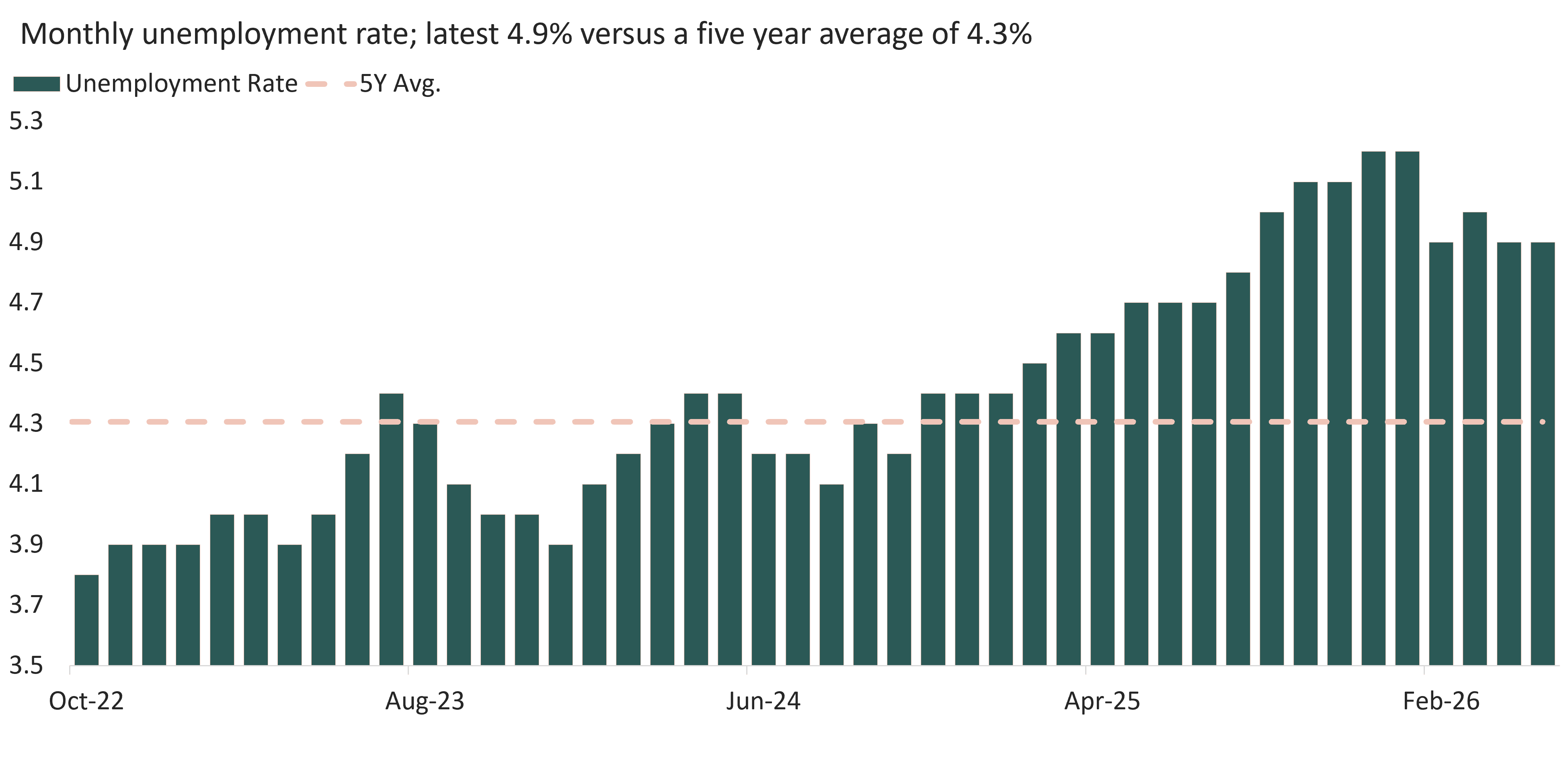
Economic data presented a mixed picture. Headline inflation reached 2.9%, in line with forecasts, while core inflation remained at 2.6% for a third consecutive month. Unemployment held at 4.9%, well above its five-year average. The three-year SONIA swap rate increased from 4.13% to 4.21% over the month.
UK unemployment remains above its five-year average
What should markets watch in the short term?
Markets expect slightly more than one Bank of England rate increase before the end of the year, although conviction around the timing has weakened. Persistent slack in the labour market may limit the extent to which headline inflation feeds into wages and underlying prices.
Core inflation remaining at 2.6% could nevertheless indicate that the UK has entered a higher inflation regime than it experienced during the early 2000s.
What about the coming months?
Fiscal credibility and economic growth will remain central to the outlook for gilts and Sterling. Recent research suggests UK productivity may finally be improving after almost two decades of stagnation, although the evidence remains disputed.
A sustained recovery in productivity would help reduce pressure on the public finances. Without stronger growth, high debt levels and further government borrowing could continue to place upward pressure on longer-term yields.
Key watchpoints
Bank of England guidance, labour-market conditions, public borrowing and emerging productivity data.
United States and the Dollar
What happened last month?
Federal Reserve Chair Kevin Warsh used his Jackson Hole speech to emphasise price stability and reaffirm the 2% inflation target. With July PCE inflation at 3.7%, markets responded by increasing the implied probability of a September rate rise to approximately 65%.
Concerns about US fiscal sustainability also intensified after national debt exceeded $40 trillion. Long-term Treasury yields continued to rise as investors demanded greater compensation for holding government debt. The three-year SOFR swap rate increased slightly from 4.00% to 4.02%.
The earlier return of the “debasement trade” supported gold and Bitcoin while weighing on the Dollar and long-dated government debt. A reported $4 billion Treasury intervention temporarily lifted bond prices, but did not remove the underlying fiscal concerns.
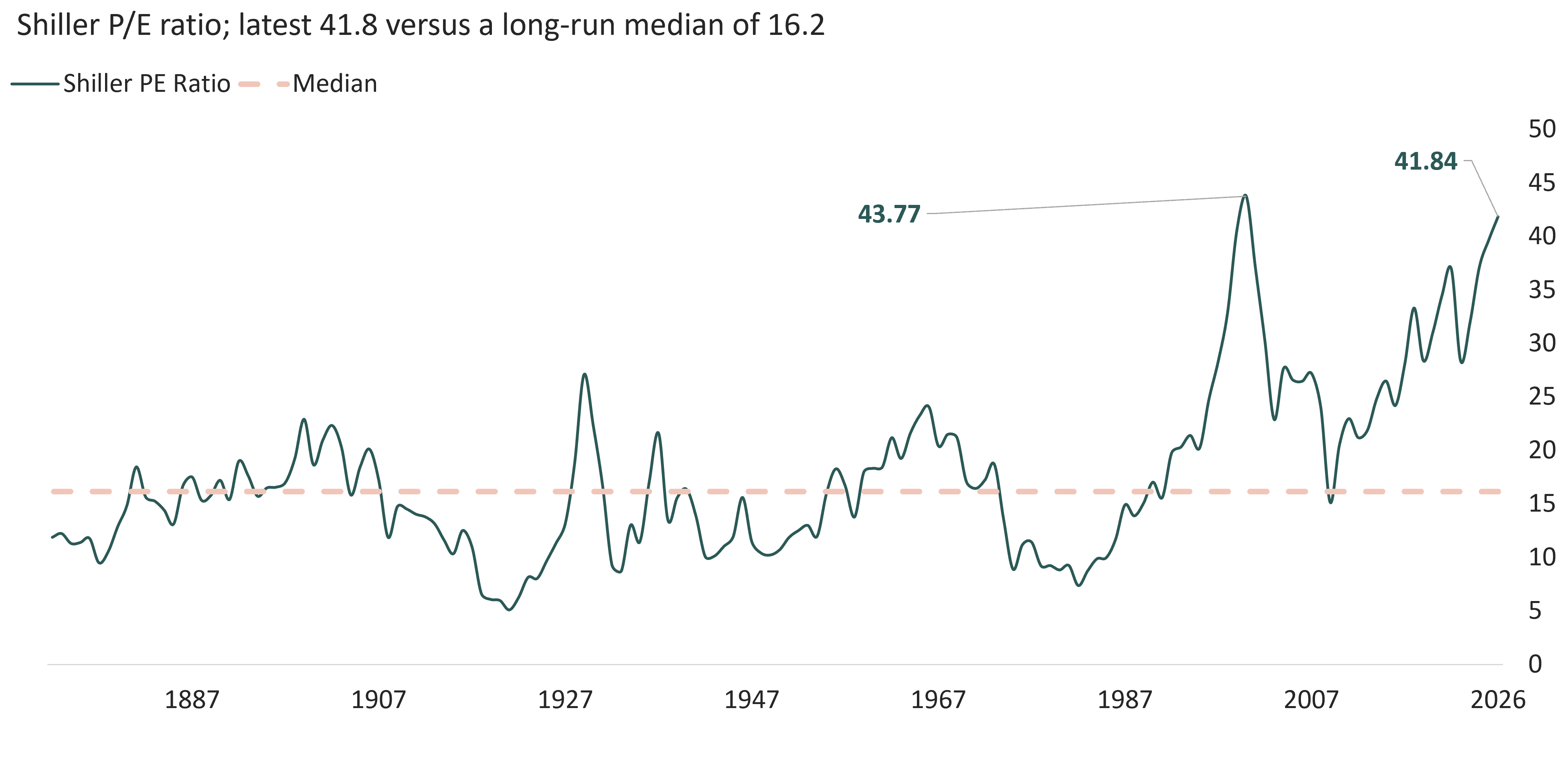
US equity valuations remain historically elevated
What should markets watch in the short term?
The immediate focus is whether the Fed’s more hawkish language results in a September rate increase. Markets will continue to follow PCE inflation and the long end of the Treasury curve for evidence that concerns about debt and deficits are becoming more persistent.
Equity valuations also remain stretched. The Shiller price-to-earnings ratio is approximately 41, around 2.5 times its historical median. Expectations of lower interest rates have supported these valuations, leaving markets sensitive to any further repricing of the policy outlook.
What about the coming months?
The interaction between monetary policy, government borrowing and technology investment will shape the US outlook. Major technology companies have issued more than $200 billion of corporate bonds this year to finance AI infrastructure, extending elevated valuations from equity markets into credit.
Higher real yields or a prolonged period of restrictive monetary policy could place pressure on both markets. Fiscal intervention may provide temporary support, but investor confidence in the sustainability of US debt will remain an important driver of the Dollar and Treasury yields.
Key watchpoints
The September Federal Reserve decision, PCE inflation, long-term Treasury yields and technology-sector borrowing.
Euro Area and the Euro
What happened last month?
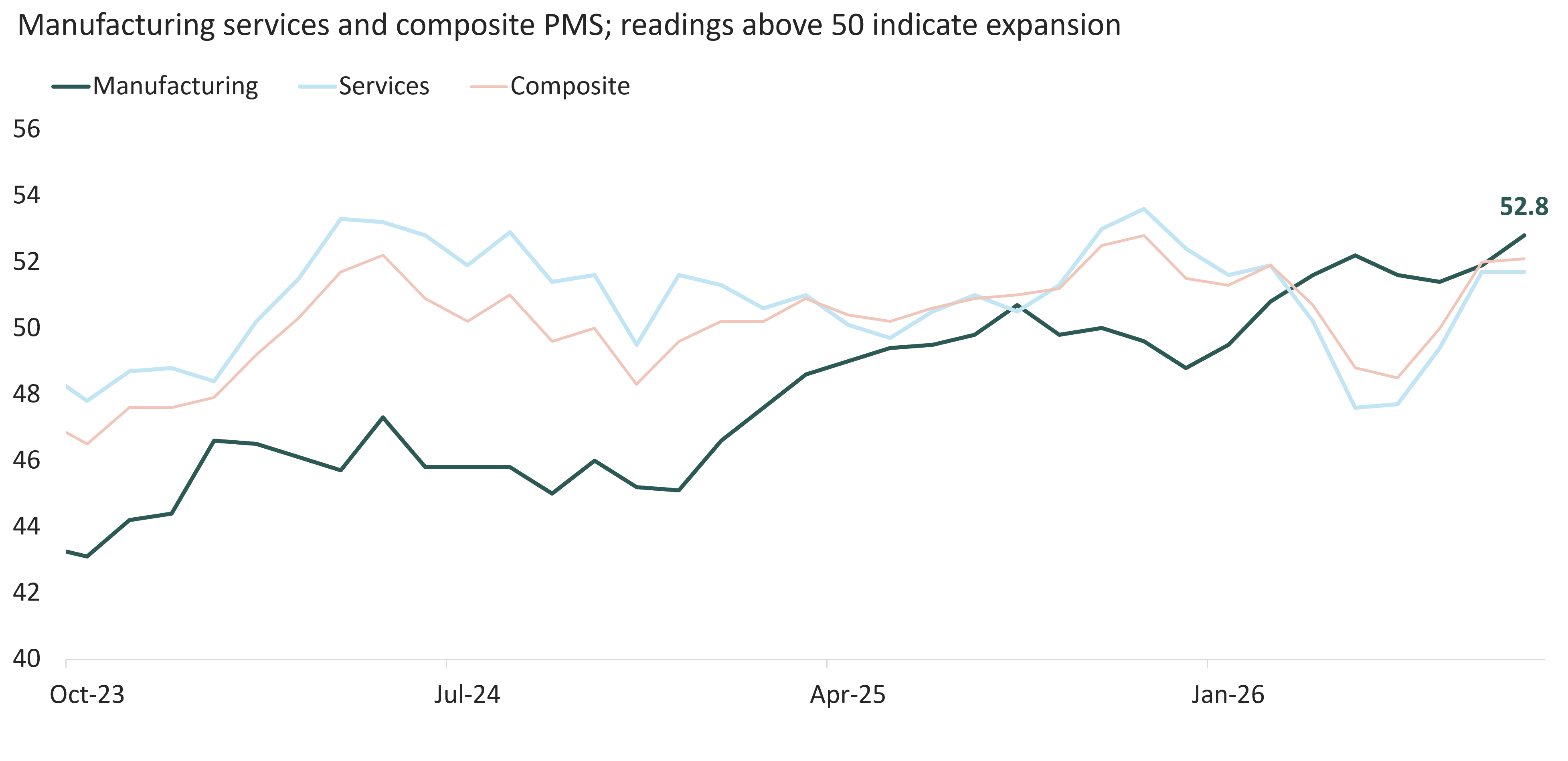
The Euro-area economy remained resilient during August. The composite PMI reached 52.1, ahead of expectations of 51.7, with both manufacturing and services continuing to expand. Manufacturing recorded the strongest improvement, rising by 0.9 points from July.
Growth in input costs and selling prices also slowed despite higher energy prices. This may indicate that the effect of energy costs on core inflation has been weaker than markets previously expected. The three-year EURIBOR swap rate remained unchanged at 2.86%.
What should markets watch in the short term?
Markets assign a 95% probability to an ECB rate increase in September. Attention will focus on whether resilient activity and potential supply-driven inflation are sufficient to justify tighter policy.
Low water levels on the Rhine present a more immediate risk. The river carries approximately 80% of Germany’s domestic shipping, and reduced barge capacity could disrupt supply chains. ING estimates that the disruption could reduce German GDP by approximately 0.2%.
What about the coming months?
Weather and energy security could become increasingly important. European gas storage remains unusually low, while institutional demand to replenish reserves may support prices through the end of the year.
Morgan Stanley estimates a 95% probability of El Niño conditions emerging by December 2026. Combined with constrained fertiliser supplies, this could disrupt agricultural production and contribute to higher food prices. Much of the inflationary effect may emerge during 2027 rather than this year.
Key watchpoints
The September ECB meeting, Rhine water levels, European gas storage and weather-related pressure on food and energy supply.